If you’re shopping for a subwoofer to enhance music playback, the right choice adds deep, tight bass without overwhelming your main speakers. This guide highlights five solid options suited for music lovers who want accurate low end, whether you’re building a compact stereo setup or a small home theater. The top picks are best for: small-to-mid rooms, studio-quality music listening, budget-conscious setups, and easy wireless integration. Below is a quick table summarizing the featured products and who they’re ideal for.
| Product | Best For | Key Benefit |
|---|---|---|
| Polk Audio PSW10 | Budget-conscious music lovers | Compact 10″ with 100W peak power |
| Klipsch R-100SW | All-around music lovers | Front-firing 10″ driver with strong digital amp |
| PreSonus Eris Sub 8BT | Home studio and hi-fi listening | 8″ front-firing, 100W, Bluetooth |
| Klipsch R-12SW | Powerful home audio | 12″ copper-spun woofer, 400W |
| BESTISAN Powered Subwoofer | Flexible, easy integration | Down-firing design with versatile inputs |
Polk Audio PSW10 10″ Subwoofer
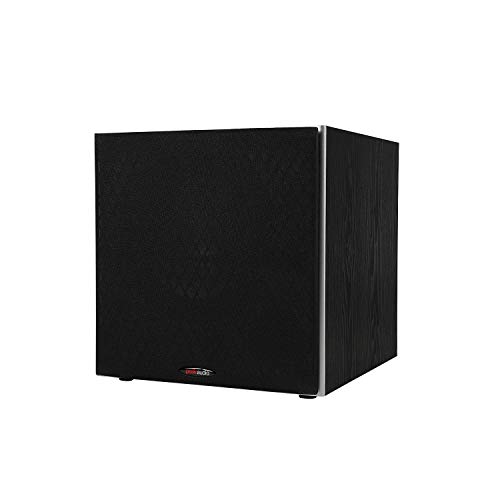
Best for small-to-mid rooms where you want reliable bass without crowding the space. The Polk PSW10 uses a 10″ Dynamic Balance woofer and a built-in 50W RMS amplifier to deliver up to 100W peak power. This combination provides deeper bass with controlled distortion, making it suitable for music playback across genres. The enclosure design emphasizes resonance control and a smoother low end, helping it blend with a wide range of speakers. A potential limitation is that performance may be more modest in very large rooms or with demanding home theater setups where higher output is desired.
Klipsch R-100SW 10″ Subwoofer

Best for an all-around music setup that benefits from a solid punch. The R-100SW features a 10″ front-firing spun-copper IMG woofer and a digital amplifier with 300W peak power, offering ample headroom for dynamic tracks. It includes volume, low-pass crossover, and phase controls to tailor bass to your room. The main trade-off is that the compact cabinet might limit extreme low-end extension compared with larger subs in music-focused rooms.
PreSonus Eris Sub 8BT

Best for studio-quality listening and small home studios where accurate bass matters. The Eris Sub 8BT is an 8″ powered sub with 100W peak output, designed for clean low-end response and tight, controlled bass. Its front-firing design helps with placement flexibility, and Bluetooth adds convenient wireless streaming. A consideration is that the 8″ woofer may not deliver the deepest bass in very large rooms or for cinema-style listening.
Klipsch R-12SW 12″ Subwoofer

Best for powerful music playback and movies in medium rooms. The R-12SW houses a 12″ copper-spun woofer and a 400W all-digital amplifier, delivering deep, dynamic bass with clarity. It pairs well with mid- to high-end speakers and supports strong performance across genres. A potential limitation is its larger footprint and higher power draw, which may not suit ultra-compact spaces.
BESTISAN Powered Subwoofer

Best for flexible setups and easy integration with various audio systems. BESTISAN offers a down-firing design with multiple inputs (RCA, LFE, AUX) and easy pairing with main speakers or soundbars. It delivers powerful bass in a compact footprint and supports immersive home theater or music listening. The down-firing design can require careful placement on carpets or hard floors to avoid bass hotspots. Consider room layout when aiming for uniform bass response.
Buying Guide: Key Purchase Considerations
- Room size and seating layout: Smaller rooms benefit from 8–10″ subs with moderate power; larger rooms may need 12″ subs or more powerful amplification.
- Speaker compatibility: Ensure a sub’s crossover and phase controls align with your existing speakers for seamless integration.
- Music vs. cinema balance: For music-first setups, prioritize accuracy and tight bass; for cinema, prioritize headroom and impact.
- Placement flexibility: Front-firing woofers are easier to place near walls; down-firing designs may require more experimentation with placement.
- Connectivity: Look forSubs with common inputs (RCA, LFE) and optional wireless or Bluetooth if you want flexible placement.
- Controls and calibration: Subwoofers with adjustable low-pass filters and phase controls help tailor the bass to your room and main speakers.
- Durability and build quality: A sturdy enclosure and high-quality drivers reduce unwanted resonance and distortion.
- Budget vs. performance: Balanced choices deliver better integration and sound quality without overspending.
Frequently Asked Questions
- What is the best subwoofer for music in a small room?
– Subwoofers with 8″ to 10″ drivers and strong, clean amplification are typically ideal for small rooms, providing tight bass without overwhelming the space. - How do I integrate a sub with my existing speakers?
– Use the sub’s crossover settings to blend with your main speakers, set phase for minimal bass cancellation, and adjust volume for even listening across tracks. - Is wireless subwoofer connectivity reliable?
– Wireless options offer placement flexibility but may introduce latency or interference in certain environments; wired connections are typically more stable for critical listening. - Do larger subwoofers always sound better?
– Not always. Large subs can deliver deeper bass, but they require proper room placement and can overwhelm smaller rooms or lead to boomy bass if not calibrated correctly. - Which feature matters most for music listening?
– Accuracy and low-end control matter most; look for tight bass with minimal distortion and a clear, integrated sound with your mains.