Looking for a reliable, affordable point-and-shoot camera that’s easy to use and fast to share? This guide highlights five budget-friendly options that balance image quality, convenience, and features. Each pick suits different buyers—from kids and beginners to casual photographers seeking portability and simplicity. The top choices emphasize practical sensors, reliable zoom, and user-friendly interfaces, helping you capture memories without breaking the bank.
| Product | Best For | Key Benefit |
|---|---|---|
| KODAK PIXPRO FZ55 (Blue) | Casual daily shooters | 16MP sensor with 5x optical zoom |
| KODAK PIXPRO FZ55 (Black) | Travel and family moments | Compact, versatile zoom for varied scenes |
| Lecran Digital Camera | Kids and beginners | Compact, simple operation with included 32GB card |
| CAMKORY Digital Camera | Casual learning and travel | 1080P video, beginner-friendly features |
| HILDCROA DX5 (Kids) | Young creators | 15-16MP class, 16x zoom, multi-scene modes |
KODAK PIXPRO FZ55 16MP Compact Camera – Blue

The sixteenth-megapixel CMOS sensor supports everyday shooting with reliable detail. A five-times optical zoom with a 28mm wide-angle lens offers flexible framing for indoor and outdoor scenes. Full HD 1080p video records travel clips, family moments, or simple vlogging. Best for travelers who want a compact camera with dependable basics and straightforward controls.
Who it’s for: casual shooters who want a familiar, pocket-friendly option with solid photo and video basics.
Why chosen: The FZ55 provides a well-balanced mix of sensor quality, optical zoom, and video capability at a budget-friendly price point.
Caution: Image quality is good for everyday snapshots but not a high-end enthusiast choice in low light.
KODAK PIXPRO FZ55 16MP Compact Camera – Black

This variant shares the same 16MP sensor and 5x optical zoom, with the same 1080p video capability. It’s a practical pick for buyers who prefer a discreet black finish that won’t show fingerprints or busy usage marks as readily. Best for families that want a go-to camera for everyday outings and school events.
Who it’s for: those who want consistent performance with a neutral color option.
Why chosen: Availability in a non-glossy finish makes it a versatile everyday companion across activities.
Caution: Color choice does not alter core performance; consider handling comfort and ergonomics in person if possible.
Digital Camera for Kids Teens – 32GB Card Included
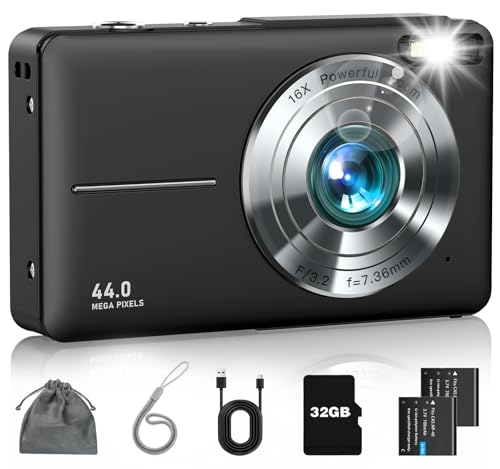
Designed for younger users, this camera emphasizes simplicity with a high-performance CMOS sensor and anti-shake features that help produce clearer 44MP-equivalent photos and Full HD 1080p videos. Includes a pre-formatted 32GB card and beginner-friendly controls, making it a practical gift or learning tool. Best for kids and beginners who want straightforward operation without complexity.
Who it’s for: kids, teens, and first-time photographers seeking a simple, reliable experience.
Why chosen: The package includes essential accessories, aiding quick setup and ongoing use.
Caution: Performance and photo quality are oriented toward learning and casual use rather than advanced photography.
Digital Camera 1080P with 32G Card – Kid Friendly

This camera emphasizes easy operation with a 2.4-inch LCD, a simple menu, and a kid-friendly interface. It ships with a 32GB memory card, a rechargeable battery, and a wrist strap for portable use. Best for beginners who value straightforward controls, quick setup, and travel-friendly size.
Who it’s for: families seeking an affordable, approachable option for first-time shooters.
Why chosen: Combines essential features with a practical bundled package for immediate use.
Caution: Being kid-focused, it may lack advanced controls or premium image sensors found in higher-end models.
Digital Camera for Kids – 48MP FHD 1080P

This model combines a compact build with a 48MP-equivalent capability, 16x zoom, and anti-shake features suitable for young learners. It includes 16x zoom, multiple shooting modes, and a kid-friendly design for easy handling. Best for older children who want more zoom flexibility while maintaining simplicity.
Who it’s for: children who outgrow basic shots but still need simple controls.
Why chosen: Offers a richer feature set for a modest price point while staying approachable for younger users.
Caution: The emphasis on kid-friendly use may mean less advanced image quality in fine detail compared to prosumer models.
Buying Guide
What should I look for in a value point-and-shoot?
Key factors include sensor size and megapixel performance, optical zoom quality, video capabilities, and ease of use. For everyday photos, a 16MP class sensor with at least 3x–5x optical zoom often balances image quality with portability. Look for full HD (1080p) video as a baseline feature for quick sharing.
What’s better for kids or beginners?
Kid-focused models typically include simple menus, battery efficiency, and bundled accessories. If learning the basics is the goal, choose cameras with automatic modes, built-in guides, and durable construction. A larger LCD can help young creators frame shots easily.
Should I prioritize size, weight, or battery life?
Yes. Compact cameras are easier to carry all day, but ensure the battery life aligns with your outings. If you photograph on family trips or events, a camera with a spare battery or energy-saving features is advantageous.
Is color or finish important?
Finishes matter for handling and appearance but do not affect performance. Choose a color and texture that you’ll enjoy handling and that resists visible wear in daily use.
What about connectivity?
WiFi or app-based sharing can streamline posting to social media. If immediate transfer to mobile devices is valuable, look for models with built-in WiFi or Bluetooth compatibility and compatible transfer apps.
FAQ
- Do I need a high-end camera for everyday photos? No. For most daily tasks, a 16MP sensor with reliable autofocus and 1080p video is sufficient.
- Are kid cameras good for learning photography? Yes. They provide simple interfaces, fun shooting modes, and durable designs that encourage practice.
- Is optical zoom better than digital zoom? Yes. Optical zoom preserves resolution and detail, while digital zoom can blur edges as you magnify the image.
- Can I rely on these cameras without extra gear? For basic use, yes. A memory card and spare batteries are often the minimal additional gear users appreciate.
- Which camera is best for quick sharing on social media? Cameras with built-in WiFi and straightforward transfer apps tend to integrate best with mobile devices for fast posting.