Choosing the right varnish for acrylic paintings protects color, adds the desired finish, and preserves works over time. This guide highlights five top choices, detailing who they’re best for and why. It helps artists—from beginners to professionals—decide between gloss, satin, and non-yellowing options based on finish, durability, and application. A quick summary table follows to compare key points at a glance.
| Product | Finish Type | Best For | Notes |
|---|---|---|---|
| Liquitex BASICS Gloss Varnish, 250ml | Gloss | Beginners and students seeking a clear, vibrant sheen | Mixable with matte for custom gloss levels |
| MCTRHG Clear Acrylic Gloss Varnish | Gloss | Artists needing a rich, reflective finish with strong UV protection | Self-leveling; clear and non-clouding |
| Liquitex Professional Gloss Varnish, 473ml | Gloss | Professionals wanting archival, durable gloss | Non-yellowing; hard but flexible finish |
| GRANOTONE Clear Coat Acrylic High Gloss Varnish | Gloss | Pro and hobbyists seeking crystal-clear protection | Resists crazing; versatile for various artworks |
| U.S. Art Supply 32 oz High Gloss Varnish | Gloss | Large projects and studios needing a durable gloss finish | Permanent, non-yellowing; UV-protective finish |
Liquitex BASICS Gloss Varnish, 250ml

Finish: Gloss. Official use: Permanent gloss varnish to protect finished paintings. It can be mixed with matte varnish to vary sheen and dries to a clear, non-yellowing finish. Best for artists seeking a bright, vivid finish and a straightforward, mixable option.
- Best for beginners or students who want an easy, mixable gloss layer.
- Caution: Fine-line brush marks may appear if applied too thickly; apply thin, even coats.
Clear Acrylic Paint Sealer, MCTRHG
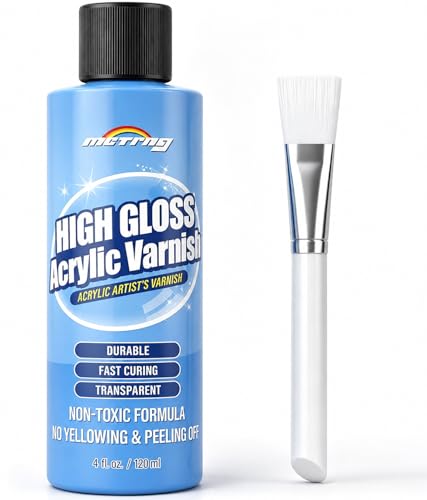
Finish: Gloss with a crystal-clear, wet-look sheen. Provides permanent protection and UV resistance to guard against yellowing and fading while enhancing color depth. Dries quickly with a glass-like shine and self-levels to minimize brush marks.
- Best for artists who want a bold, reflective finish and strong UV protection.
- Caution: Layering too many coats can lead to a heavy buildup in textured areas.
Liquitex Professional Gloss Varnish, 473ml

Finish: Gloss. Features include archival, permanent, non-removable protection that dries to a hard, flexible surface and remains non-yellowing and water-resistant when dry. Aimed at professionals needing a reliable, long-lasting gloss layer.
- Better for professional projects requiring durable archival protection.
- Caution: Larger bottle may be more than needed for casual or small works.
GRANOTONE Clear Coat Acrylic High Gloss Varnish

Finish: High gloss with a crystal-clear sheen. Marketed as top-tier for premium protection and a clear finish that resists yellowing. Suitable for both professional artists and hobbyists who want a durable, pristine look and protection from environmental factors.
- Best for elevating gold or metallic acrylic work and protecting with a crisp finish.
- Caution: May require careful application to avoid microbubbles in very humid conditions.
U.S. Art Supply 32 oz High Gloss Varnish

Finish: Permanent gloss with UV protection. Dries clear to a water-resistant, high-gloss finish, suitable for sealing and protecting acrylic paintings. Best for large-scale works or studio use where a dependable, non-yellowing finish is needed.
- Best for large studios or multiple projects requiring consistent gloss protection.
- Caution: Large quantities may take longer to dry fully in humid environments.
Buying Guide
What finish should you choose?
- Gloss varnish provides vibrant color and a shiny surface, ideal for emphasis and depth.
- Satin varnish offers a softer sheen with less reflective glare, good for portraits or pieces where a non-glare finish is desired.
- Matte varnish yields a flat, non-reflective surface and can mute color slightly; use when you want a muted or vintage look.
How much varnish do you need?
- Small works: 150–250 ml can be enough, depending on textures and layering.
- Medium to large works or studio use: 500 ml to 1 liter bottles are common to cover multiple pieces efficiently.
What should you consider for longevity?
- Archival, non-yellowing formulas are preferable for long-term preservation.
- UV protection helps prevent fading when pieces are exposed to light.
- Self-leveling and non-clouding formulas reduce brush marks and surface imperfections.
How should you apply varnish?
- Apply in thin, even coats using a clean brush, foam brush, or spray depending on product guidelines.
- Allow adequate drying time between coats and ensure the artwork is dust-free before varnishing.
- Test a small area first to confirm desired sheen and drying behavior.
Frequently Asked Questions
- What varnish finish is best for acrylics if you want bright colors? Answer: Gloss varnish enhances color vibrancy and depth, especially when layered sparingly over dried paint.
- Can I mix matte and gloss varnishes? Answer: Yes, some products are designed to be mixed to achieve a custom sheen, but follow manufacturer guidance to avoid adverse reactions.
- Is a satin varnish better for portraits? Answer: Satin offers a balanced sheen that reduces glare while preserving color integrity, often preferred for portraits.
- Will varnish yellow over time? Answer: Choose an archival, non-yellowing varnish to minimize yellowing, especially for pieces stored in bright light.
- Do I need UV protection in varnish? Answer: UV protection helps prevent fading; consider varnishes labeled with UV resistance for works exposed to light.
- How long should varnish dry before framing? Answer: Dry times vary by product and environment; follow the label and ensure a fully cured finish before handling.