If you’re battling hard water at home, a whole‑house water softener can dramatically improve your water quality and protect appliances. This guide highlights five solid options well‑suited for American homes facing mineral-rich supply. Best for households with multiple bathrooms, these systems soften water, reduce scale, and improve skin, hair, and appliance life. Each product is chosen for clear performance, install practicality, and ongoing maintenance considerations.
| Product | Best For |
|---|---|
| Aquasure Harmony 48,000 Grains | Large homes (3–4 baths); high efficiency |
| Aquasure Harmony 50,000 Grains | Mid‑to‑large homes; strong pre-filter |
| iSpring WCSTB45KG | Whole-house softening; versatile water sources |
| Aquasana SimplySoft 40K | Smaller to mid homes; straightforward setup |
| Aquasure Harmony 32,000 Grains | Smaller homes or budget-conscious buyers |
Aquasure Harmony Series 48,000 Grains Whole House Softener

Best for large households with 3–4 bathrooms. This professional‑grade unit treats up to 48,000 grains of hardness and supports full-home delivery of ultra‑softened water. The high‑efficiency control head optimizes regeneration, while a triple pre‑filter (sediment, carbon, zinc) reduces chlorine, VOCs, pesticides, and other contaminants. Suitable for protecting appliances like washing machines, dishwashers, and water heaters from scale buildup.
Who it’s best for: families with multiple bathrooms and higher water usage who want comprehensive hardness reduction and improved water quality. Caution: installation and maintenance are more involved than entry‑level models; ensure proper space and electrical connections.
Aquasure Harmony Series 50,000 Grains Softener
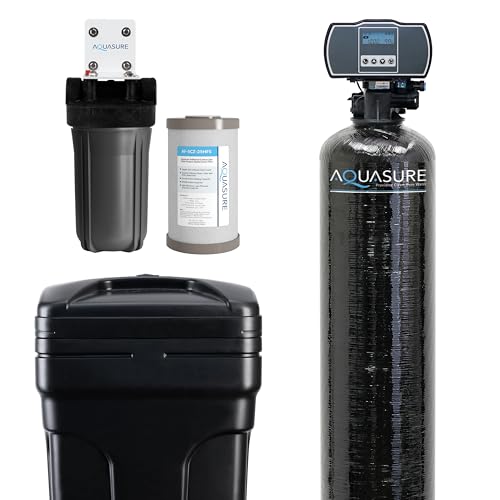
Best for households with 3–4 bathrooms needing robust hardness removal and a built‑in pre‑filter package. The 50,000‑grain rating targets mineral buildup efficiently, while a triple‑purpose pre‑filter helps remove a broad range of contaminants, odors, and tastes. This model emphasizes appliance protection and overall water quality for a full home.
Who it’s best for: buyers seeking strong hardness control and cleaner water without adding external filtration stages. Limitation: larger footprint and higher initial cost compared with smaller units.
iSpring WCSTB45KG 45,000 Grains Softener
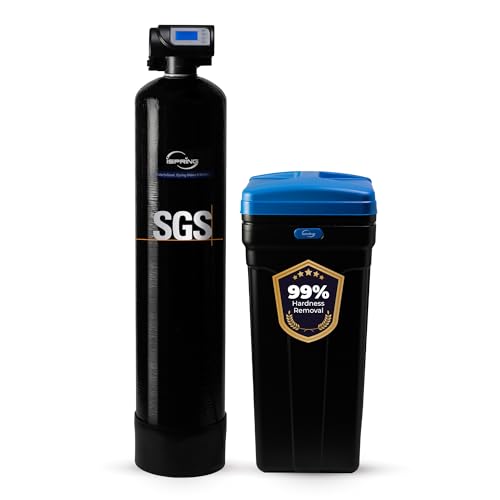
Best for versatile water sources and those seeking strong overall softening with a smart control valve. The 45,000‑grain unit delivers softened water across the home and includes a programmable automatic cycle that adjusts regeneration based on usage and water quality. It’s compatible with city or well water, supporting extended appliance life and reduced scale.
Who it’s best for: families needing reliable whole‑house softening with automatic efficiency and easy monitoring. Caution: installation can be more technical; confirm suitability for existing plumbing and brine tank location.
Aquasana SimplySoft Whole House Water Softener

Best for smaller to mid‑sized homes seeking simple, reliable softening and scale prevention. The 40,000‑grain design is paired with a focus on skin and hair benefits from softened water. The system is IAPMO certified and provides scale reduction without salt or chemical additives in the main process, making it appealing for households prioritizing lower maintenance.
Who it’s best for: buyers who want a straightforward, compact solution with dependable performance. Caution: lower grain rating than larger systems means less reserve for higher usage periods.
Buying Guide
What size softener do I need?
Choose a unit rated for the number of bathrooms and peak water usage in your home. A higher grain capacity is better for larger families or homes with frequent high water consumption. If you consistently see scale on fixtures, a larger capacity model can help prevent buildup more effectively.
Salt-based vs salt-free options
Salt-based models actively remove hardness minerals, providing stronger long‑term scale prevention for most households. Salt-free systems don’t soften water but alter mineral behavior to reduce scale; they suit households seeking chemical-free solutions but may not fully reduce hardness. Consider water chemistry and lifestyle when choosing.
Pre-filtration considerations
Pre-filters (sediment, carbon, zinc, etc.) help remove chlorine, VOCs, pesticides, and sediment before water reaches the softener. This protects the resin bed, improves water quality, and may reduce maintenance needs over time.
Installation and maintenance
Assess available space, electrical requirements, and plumbing compatibility. Some models include digital meters and auto‑regeneration, which can save salt and water but require occasional programming. Regular resin bed cleaning or replacement of pre-filter cartridges is typical maintenance considerations.
Appliance protection and water quality
Softened water reduces scale in pipes and appliances, potentially extending life for water heaters, dishwashers, and washing machines. If you rely on hard water for irrigation or specific processes, you may want to balance softening with overall water chemistry.
Cost vs. value
Initial costs vary by capacity and features. Consider long‑term savings from reduced scale, improved appliance efficiency, and lower maintenance needs. A higher‑capacity model can provide better value for busy households.
FAQ
- What grain rating do I need? For most homes, start with 32,000–50,000 grains; larger households or hard water zones may require 48,000–60,000 grains.
- Do I need to replace the filter cartridges? Yes, many systems include pre-filters that require periodic replacement; check cartridge life and replacement cost.
- Will these systems remove all minerals? Salt-based softeners remove hardness minerals; salt-free systems don’t soften but reduce scale formation. TDS levels may remain.
- Is professional installation recommended? For most whole‑house units, professional installation ensures proper sizing and leak‑free connections, especially with brine tanks and electrical components.
- Can I use well water with these systems? Several models support well water, but confirm compatibility with iron, sulfates, and iron removal requirements.
- How will I know when to replace parts? Monitor pre-filters and resin bed performance; reduce maintenance downtime by following manufacturer guidelines.