Answering the common buyer question, these budget DSLR options deliver solid image quality, beginner-friendly controls, and essential features for learning photography. The top picks suit new shooters, students, and casual photographers who want interchangeable lenses without overspending. Below, you’ll find five well-rounded kits with clear strengths, so you can choose based on lens versatility, connectivity, and future expandability. A quick summary table follows to compare key points at a glance.
| Product | Main Strength | Best For |
|---|---|---|
| Canon EOS Rebel T7 (18-55mm II Kit) | Solid 24.1 MP sensor, built-in Wi-Fi | Absolute beginners seeking easy setup |
| Canon EOS Rebel T7 Double Zoom Lens Kit | Two lenses for versatility, improved AF | New shooters needing flexibility |
| Canon EOS Rebel T7 (Renewed 18-55 kit) | Good value with same core sensor | Budget-conscious learners open to renewed gear |
| Canon EOS 2000D / Rebel T7 + Bundles | Bundle with memory, case, and lenses | Starter kits that include gear for immediate use |
| Nikon D7500 with 18-140mm | Advanced features in a compact body | Those who want stronger performance and reach |
Canon EOS Rebel T7 DSLR Camera With 18-55mm Kit

The Rebel T7 offers a 24.1 MP APS-C sensor and a straightforward interface. This kit includes the 18-55mm lens, enabling standard everyday shooting and beginner-friendly full HD video. Best for first-time DSLR buyers who want dependable image quality with simple wireless sharing via built-in Wi-Fi. A limitation is that the kit’s autofocus and feature set are modest relative to more advanced cameras, so upgrades may be appealing as skills grow.
Best for: absolute beginners and students who want a reliable entry point with easy setup and sharing.
Canon EOS Rebel T7 Double Zoom Lens Kit

This bundle adds an additional telephoto option with the 75-300mm lens, expanding reach for distant subjects and candid moments. It retains a 24.1 MP sensor and Wi-Fi connectivity, with an improved AF system and eye detection in some configurations. Choose this if you expect to shoot a wider range of scenes without buying a separate telephoto later. Caution: more lens options require a bit more learning to master depth of field and balance.
Best for: beginners who want versatility from day one and plan to shoot subjects at varying distances.
Canon EOS Rebel T7 DSLR Camera with 18-55mm Lens (Renewed)

This renewed option preserves Canon’s core T7 performance with a 24.1 MP APS-C sensor and a 9-point AF system. It’s best for budget-minded buyers comfortable with renewed gear, offering solid imaging quality and reliable autofocus. The renewal status is the main caveat; ensure the seller’s warranty terms align with your peace of mind.
Best for: price-conscious learners who are okay with renewed equipment and want dependable image quality.
Canon EOS Rebel T7 with EF-S 18-55mm + SanDisk Card Bundle
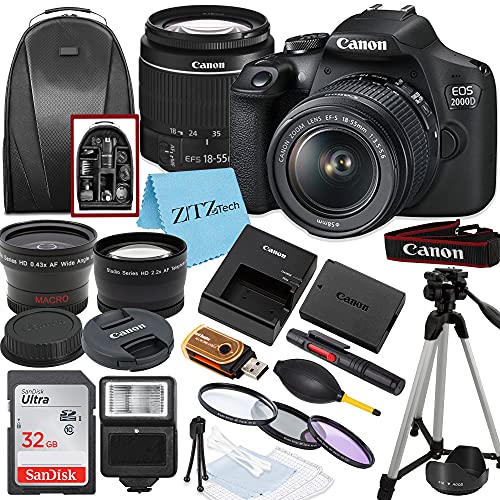
This bundle combines the Rebel T7 with a memory card and essential accessories, including a case and filters. It emphasizes ease of setup and immediate use, ideal for beginners who want everything they need in one purchase. Limitation: the bundle may include items of varying brand quality, so verify item quality and compatibility before use.
Best for: new photographers seeking a turnkey package that starts with ready-to-shoot capability.
Canon EOS Rebel T7 DSLR Camera With 18-55mm And 75-300mm Bundles

This bundle includes two versatile zoom lenses and a full Canon USA warranty, making it appealing for buyers who want both standard and telephoto capabilities without purchasing separate kits. It supports the 24.1 MP sensor, fast DIGIC 4+ processing, and Wi-Fi in a single package. Caution: Renewed or bundled components may vary by seller; confirm included items and warranty terms before buying.
Best for: shooters who want ready-to-go versatility and official Canon support in one package.
Buying Guide: Budget DSLR Purchasing Essentials
- Sensor and image quality: Most budget DSLRs use a 24.1 MP APS-C sensor. This provides strong detail for prints and online sharing, with good performance in typical lighting.
- Lens versatility: Start with a standard 18-55mm kit lens. Consider bundles with additional telephoto or wide-angle lenses if you plan to shoot landscapes or distant subjects.
- Autofocus and speed: Entry-level DSLRs typically have 9-point AF systems. They are sufficient for beginners, but consider a model with improved AF if you anticipate fast-moving subjects.
- Connectivity: Built-in Wi-Fi (and sometimes NFC) enables quick sharing and remote shooting. This is convenient for beginners who want to transfer photos to phones easily.
- Bundles vs. body-only: Bundles save time and may include memory cards, bags, filters, and extra lenses. Verify the exact contents to ensure you’re getting real value.
- Renewed vs. new: Renewed units can offer substantial savings but come with varying warranties. Understand the return policy and warranty coverage before purchasing.
- Size and ergonomics: If you have small hands or prefer light gear, test the grip feel and weight. A comfortable camera encourages longer practice sessions.
- Future upgrades: If you expect to expand to more lenses or advanced features, choose a model with good compatibility and a robust ecosystem of lenses and accessories.
FAQ
- What is a budget DSLR best for?
Budget DSLRs are best for beginners who want solid image quality, easy operation, and room to grow with interchangeable lenses without high upfront costs.
- Is a kit with multiple lenses worth it?
Yes, for beginners who want immediate versatility from different focal lengths without buying lenses separately.
- Should I buy renewed or new?
Renewed gear can offer substantial savings. Check the warranty terms and seller reliability before purchasing.
- Do budget DSLRs shoot good video?
Most offer Full HD video. For higher video demands, consider a model with improved autofocus during video and decent low-light performance.
- What should I upgrade first after buying a budget DSLR?
Consider a versatile zoom lens or a faster memory card. Upgrading to a brighter lens or adding a tripod can improve image quality significantly.
- Is wireless sharing important for beginners?
Yes, built-in Wi-Fi makes it easy to transfer photos to a phone or tablet for quick sharing and backup.