Need reliable off-grid power for camping? This guide highlights the best power banks for camping, focusing on reliability, portability, and versatility. Each option targets different campers—from ultralight hikers to car campers and off-grid travelers. The table below compares key attributes to help you choose quickly.
| Product | Capacity | Output | Weight | |
|---|---|---|---|---|
| Jackery Explorer 300 | 292Wh | 300W | 7.5 lb | Laptop travel and multi-device camping |
| BLAVOR Solar Power Bank 10,000mAh | 10,000mAh | 20W USB-C | ~0.6 lb | Compact emergency charging and phones |
| MARBERO Portable Power Station | 88Wh | 120W | ~3.2 lb | Road trips with multiple ports |
| HOWEASY 135W Solar Generator | 98Wh | 135W | ~2.3 lb | FAA-friendly travel and mini appliances |
| Anker SOLIX C300 | 288Wh | 300W | ~6.8 lb | Durable LiFePO4 for long adventures |
Jackery Explorer 300 Portable Power Station

The Jackery Explorer 300 is a compact, LiFePO4-based power generator suitable for lightweight camping and backcountry trips. It provides 292Wh capacity with a 300W continuous output and a 600W peak surge, supporting laptops, cameras, drones, and CPAP devices when needed. Its 7.5-pound frame includes a built-in handle for easy carrying. Best for campers who want reliable off-grid power without added bulk, and who may expand with solar panels for longer stays.
Best for: hikers and car campers who need a versatile, durable backup with multi-port output. The LiFePO4 chemistry promises long cycle life, contributing to years of dependable service. A potential limitation is that it’s not the lightest option in the field, so ultra-light backpackers may prefer smaller packs.
BLAVOR Solar Power Bank 10,000mAh

BLAVOR’s solar power bank emphasizes versatility and quick charging in a slim package. The unit combines USB-C input/output with 20W fast charging and the ability to power three devices simultaneously. Its 10,000mAh capacity suits short trips or as a backup for phone-heavy excursions. The battery chemistry prioritizes safety and durability, and it includes dual flashlight features for campsite visibility.
Best for: casual campers and hikers who want a compact, USB-C-centric charger with solar usability. Caution: 10,000mAh is modest for powering larger devices overnight; plan for smaller devices or supplementary charging when off-grid for longer periods.
MARBERO 88Wh Portable Power Station
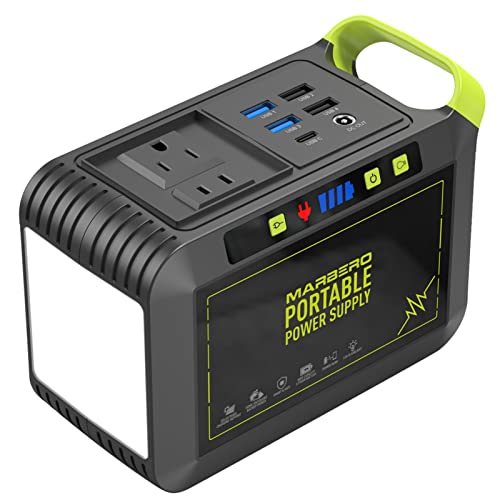
MARBERO’s compact 88Wh power station combines eight ports with a compact 6.5 x 4.6 x 3.1-inch footprint. It supports multiple outputs, including AC, USB, and DC, all managed by a built-in BMS for safety. The included car DC charger enables running car refrigerators and small devices during emergencies. It’s a practical choice for road trips, backpacking-friendly setups, and emergency kits where space matters.
Best for: campers who need multiple simultaneous outputs in a small footprint. Better for short trips or RV use where compact power is adequate. Limitation: 88Wh capacity may require frequent recharging on longer trips away from outlets or panels.
HOWEASY Portable Power Station, 135W

HOWEASY delivers a 98Wh unit with 135W peak output and a 65W PD charging port. It offers eight output options, including two AC outlets, USB-C PD, USB-A, and DC ports, plus a clear status display. Weighing about 2.3 pounds, it’s highly portable and includes multiple recharging modes (AC, solar, car). Choose this for a lightweight setup that still powers phones, laptops, mini-fridges, and essential lighting during outdoor trips.
Best for: travelers needing airline-safe capacity and flexibility for small devices. Caution: 98Wh capacity may be insufficient for extended power needs without frequent recharging.
Anker SOLIX C300 DC Power Bank Station

The Anker SOLIX C300 is a robust 288Wh LiFePO4 portable power station offering 300W output. It stands out with a three-year LiFePO4 battery guarantee, strong temperature control, and impressive durability for long expeditions. It supports USB-C, USB-A, and DC outputs, delivering reliable power for camping, travel, or emergencies without frequent recharging. This option suits campers who prioritize longevity and performance across multiple devices.
Best for: long trips and repeat use where long battery life is essential. Better for: users who want a resilient power station with a long lifecycle. Limitation: Powering heavy appliances near the 300W limit may require careful management to avoid tripping outlets or depleting the battery quickly.
Buying Guide: Key Considerations for Camping Power Banks
- Capacity vs. weight: Higher capacity means more power but more weight. Match capacity to your trip length and device needs.
- Output ports: Ensure the unit provides enough USB-C, USB-A, and AC outlets for your gear. A PD (Power Delivery) port speeds up charging laptops and tablets.
- Battery chemistry: LiFePO4 offers longer cycle life and stability in outdoor conditions. Li-ion variants are lighter but may require more careful handling over time.
- Recharging options: Solar compatibility extends off-grid use. Check panel compatibility and charging times in sun exposure.
- Portability features: Built-in handles, compact form factors, and weight influence backpackability and vehicle use.
- Safety features: Look for BMS protection, overcharge/short-circuit safeguards, and thermal management for outdoor use.
- Durability and warranty: For rugged camping, choose models with sturdy housing and a long warranty horizon.
Frequently Asked Questions
- What capacity is best for weekend camping? For weekend trips, 100-300Wh power banks cover phones, lights, and small devices. For laptops or more gear, 300-700Wh is recommended.
- Is LiFePO4 better than Li-ion for camping? Yes, LiFePO4 offers longer cycle life, better thermal stability, and safer operation in outdoor environments.
- Can these power banks be charged by solar panels? Many models support solar charging via compatible panels. Check panel voltage, current, and panel-to-port compatibility.
- Should I buy a separate solar panel? A solar panel can extend off-grid use, but ensure it’s compatible with your chosen power station and travels well with your gear.
- Can I run a CPAP machine with these? Some models support CPAP devices, but verify continuous power requirements and surge capabilities before relying on them.
- What is the trade-off between weight and capacity? Higher capacity generally increases weight; choose a balance that fits your carrying plan and trip duration.