Looking for a reliable single boiler espresso machine for home use? These 5 models offer compact designs, straightforward operation, and consistent extraction for everyday espresso and milk-based drinks. Best for beginners, small kitchens, or quick‑brewing days, each option balances performance with ease of use. The list focuses on machines with a single boiler and a built‑in steam wand or milk frother for hot lattes, cappuccinos, and macchiatos.
| Product | Brand | Key Benefit |
|---|---|---|
| Breville Barista Express Espresso Machine BES870XL | Breville | Integrated grinder; fast bean‑to‑espresso workflow |
| Gaggia RI9380/46 E24 Espresso Machine | Gaggia | Solid steel, commercial vibe, 9 bar extractions |
| CASABREWS 3700 Essential Stainless Steel Espresso Machine | CASABREWS | 20‑bar pump; powerful steam wand; compact design |
| atatix Espresso Machine with Milk Frother | atatix | Professional 20 bar, precise temp control, quick heat |
| Chefman Crema Deluxe Espresso Machine with Double Boiler | Chefman | Double boiler for simultaneous frothing and brewing |
Breville Barista Express Espresso Machine BES870XL

The Breville Barista Express is a versatile single‑boiler option with an integrated grinder. It uses a 4 keys formula to deliver espresso with control from bean to cup. Best for users who want a compact, all‑in‑one setup that speeds up the process without sacrificing flavor.
Best for: Home users who want fresh grind texture and a quick turnaround from beans to espresso. The built‑in grinder helps maintain grind consistency across roast levels, and the low pressure pre‑infusion supports balanced extractions. A potential limitation is the larger footprint for a single‑boiler, which may be less ideal for very tight counters.
Gaggia RI9380/46 E24 Espresso Machine
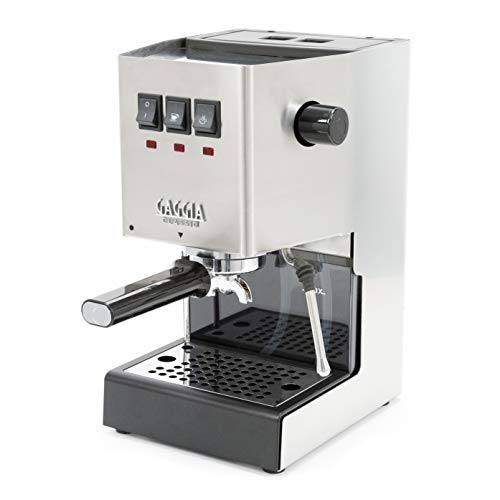
Gaggia’s E24 model offers a robust steel housing with a traditional commercial feel. It supports 9‑bar extractions and ships with a 58mm stainless portafilter for professional‑style shots. Best for: users who want a durable, visually premium machine with straightforward operation and solid extraction.
Limitation: While it emphasizes quality build, long pre‑heats and manual workflow may require more hands‑on practice compared with grinder‑integrated alternatives.
CASABREWS 3700 Essential Stainless Steel Espresso Machine

The CASABREWS 3700 offers a compact stainless steel form with a powerful 20‑bar pump and a 1350 W heating system. It’s designed for versatility, capable of producing rich espressos and milk drinks via a strong steam wand. Best for: small kitchens or offices needing a compact machine with ample steam power for cafe‑quality milk texturing.
Limitation: The 20‑bar pump delivers strong pressure, but users should monitor milk texturing to avoid over‑frothing in quick sessions.
atatix Espresso Machine with Milk Frother

atatix combines a 20‑bar system with precise temperature control, aiming to maintain a stable 90–96°C range for consistent flavor profiles. It ships with a milk frother, allowing barista‑level drinks at home. Best for: homes that want a compact, temperature‑controlled machine with reliable crema and a straightforward workflow.
Limitation: Some users may need a short learning curve to dial in the ideal grind and extraction time for different beans.
Chefman Crema Deluxe Espresso Machine
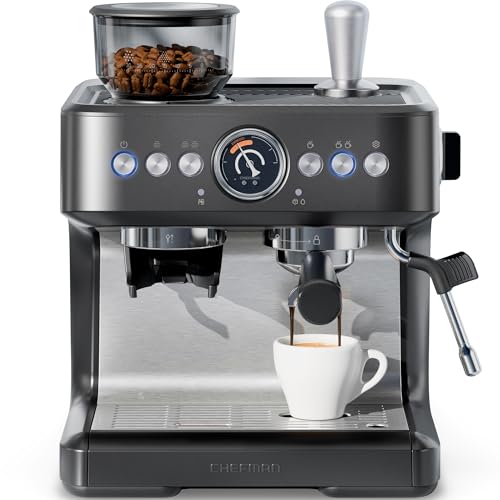
The Chefman Crema Deluxe uses a semi‑automatic design with a double boiler, enabling simultaneous milk frothing and espresso extraction. With a 30‑setting conical burr grinder option, it supports consistent grind distribution for richer crema. Best for: households that want faster sequential brewing and steaming with separate boiler control for smoother workflow.
Limitation: The dual boiler approach increases the unit’s footprint and cost relative to single boiler machines, which may be a consideration for smaller spaces.
Buying Guide: Key Considerations For Single Boiler Espresso Machines
What should you evaluate when choosing a single boiler espresso machine?
- Integrated grinder vs. separate grinder: An all‑in‑one model saves space but may limit grind customization. If you want ultimate control, a model without grinder allows pairing with your preferred grinder.
- Boiler type and capacity: A single boiler handles espresso and steam in sequence. Look for quick heat‑up times and stable temperature control to simplify your routine.
- Pressure consistency: A machine with a reliable pump (often 15‑20 bars labeled) and effective pre‑infusion helps extract balanced flavors and a better crema.
- Milk frothing capability: If you routinely make milk drinks, evaluate steam wand quality and ease of cleaning. A powerful wand produces microfoam more readily.
- Build quality and materials: Stainless steel housings and solid portafilters contribute to durability and consistent performance over time.
- Maintenance and usability: Check for straightforward descaling, easy access to the brew group, and clear indicators for water level and temperature.
Frequently Asked Questions
- What is a single boiler espresso machine best for? It’s best for compact spaces and users who primarily need reliable espresso with occasional milk drinks.
- Do single boiler machines make latte art? Yes, if equipped with a functional steam wand and proper technique, they can produce good microfoam for latte art.
- Is a built‑in grinder necessary? Not necessary, but it saves space and ensures you can grind fresh beans on demand; otherwise you’ll need a separate grinder.
- How important is boiler temperature stability? Very important; stable temperature yields more consistent shots and crema across different beans.
- Which features matter most for beginners? Simplicity of use, quick heat‑up, easy milk frothing, and a robust build typically matter most for new users.
- Are these machines hard to maintain? Maintenance varies by model, but regular descaling and cleaning of the steam wand are generally straightforward with periodic care.